 Some time in 1964-65 Brian Wilson set pen to paper and wrote the words "Wouldn't it be nice if we were older / then we wouldn't have to wait so long..." Well, Brian, you got your wish...and then some. Take a gander at the photo above; Wilson and his (still-living) Beach Boys compadres are all now pretty long in the tooth. And the album on which "Wouldn't It Be Nice" ended up - 1966's Pet Sounds - is now 46 years old. That's pretty amazing in itself, but the thing that really blows me away is the above image, particularly the juxtaposition of the words "Stream and Download" with a photo of today's Beach Boys looking ready to rock your face off (or at least lull you into a sublime slumber on the lawn of your local outdoor ampitheater). Because if there's a new Beach Boys album available for streaming and downloading, that means these guys have been alive (and working!) long enough to see the rise and fall of about 12 different types of recorded music media. And that's just nuts. If you'd sat these guys down in their living room in Hawthorne, California in 1963 and explained to them that some day their music would live in the ether and be playable on computers the size of postage stamps, they would have called you (in the parlance of their particular milieu) a real gone daddy. Yet here we are. Here's hoping that Brian and his pals live to see the day when we experience their music via microchips implanted in our heads. Wouldn't that be nice? ~ Tim
Saturday, June 9, 2012
They Get Around
Some time in 1964-65 Brian Wilson set pen to paper and wrote the words "Wouldn't it be nice if we were older / then we wouldn't have to wait so long..." Well, Brian, you got your wish...and then some. Take a gander at the photo above; Wilson and his (still-living) Beach Boys compadres are all now pretty long in the tooth. And the album on which "Wouldn't It Be Nice" ended up - 1966's Pet Sounds - is now 46 years old. That's pretty amazing in itself, but the thing that really blows me away is the above image, particularly the juxtaposition of the words "Stream and Download" with a photo of today's Beach Boys looking ready to rock your face off (or at least lull you into a sublime slumber on the lawn of your local outdoor ampitheater). Because if there's a new Beach Boys album available for streaming and downloading, that means these guys have been alive (and working!) long enough to see the rise and fall of about 12 different types of recorded music media. And that's just nuts. If you'd sat these guys down in their living room in Hawthorne, California in 1963 and explained to them that some day their music would live in the ether and be playable on computers the size of postage stamps, they would have called you (in the parlance of their particular milieu) a real gone daddy. Yet here we are. Here's hoping that Brian and his pals live to see the day when we experience their music via microchips implanted in our heads. Wouldn't that be nice? ~ Tim


Tuesday, February 28, 2012
Lightouts: The Smart Ones

It's unclear what I like more about Lightouts -- their easy-entry, stuck-on-repeat songs...or their approach to releasing them.
Although they've been putting out music for only less than a year, the Brooklyn's duo's catalog is already bursting with four sharp EPs, all self-released. (The band calls each three-track item a 'maxi-single.' Fair enough.)
Last May's 'See Clear,' the first salvo fired in Lightouts' blitz, is one of the best debut singles I've heard in awhile. Rooted in the able '90s song structure of restrained verses and rambunctious choruses, it's a taut rocker that peaks before slyly ducking out the side door by way of an unexpectedly quick outro.
It's also a fitting introduction to Gavin Rhodes and Greg Nelson's philosophy of building quiet momentum steadily through frequent releases, rather than via some Lana Del Rey-style PR sledgehammer blow to America's cerebellum. (I saw Del Rey's pouting mug plastered on the window of a San Francisco cigarette shop the other day. A cigarette shop.)
Along with its featured title track, each Lightouts EP includes a B-side that, in some cases, stands toe-to-toe with the song portrayed in big letters on the cover. And while Rhodes and Nelson's original material is always worthy of the front seat, the shrewdly curated cover versions punctuating all four EPs offer pretty accurate directions from the back: the Stone Roses' 'Here It Comes,' 'I Am The Key' by the La's, Guided By Voices' 'The Official Ironmen Rally Song,' and the piece de rocksistance, a phenomenally brilliant pastiche of LCD Soundsystem's 'All I Want' and David Bowie's 'Heroes,' which along with 'See Clear' stands tallest so far amid Lightouts' young discography.
And at a time when many bands seem to be de-emphasizing the importance of cover artwork, Rhodes and Nelson, despite only releasing music digitally to date, have opted for striking ink-on-paper works by George Boorujy for each EP. Chalk up a victory for cohesion.
It all recalls the energy of Oasis in their steak-and-potato days (albeit with far less bluster and hurl), when the fightin' Mancunians put out a flurry of nine brilliant -- and brilliantly designed -- EPs throughout 1994-96 to complement their first pair of landmark albums.
Lightouts' latest EP, released earlier this month, is 'The Cure For Shyness,' which includes a breakneck sprint of a title track backed by yet another strong B-side ('Deep Ends'), as well as the aforementioned GBV cover. (As is the case with all the band's releases, it's available as both a paid and free download.) The title track's live drums give the song a less boxed-in feel than the rest of Lightouts' drum-programmed material, and as much as I like everything the band's done so far, I cling to the traditional tenet that says every rock band worth its salt could use an Animal-like spazz behind the drumkit.

Rhodes and Nelson have indicated that a Lightouts LP (allegedly titled Want) is in the works, with another pair of EPs likely to precede it. Alright. ~ Charles Hodgkins
Friday, January 27, 2012
Ready For The Laughing Gas
I (Tim) would like to introduce a new contributor to Blogracket - Mr. Charles Hodgkins, Brandracket's fearless senior editor, and a wordsmith (and music fanatic) of the highest order. You can look forward to periodic postings from The Hodge (as I affectionately call him), each equally insightful and humorous. We're honored by his presence. First up: a rumination on U2's ground-breaking album Achtung Baby, which recently got the 20th anniversary reissue treatment from our friends at Island/Universal Music. Take it away Charles...
 I wish I could make some sort of hopelessly melodramatic statement about the first time I heard 'The Fly,' the lead single from U2's 1991 masterwork Achtung Baby. The truth, however, is a hell of a lot less sexy.
The '80s were deep in the rear view mirror by this point, and with them went U2's suffocating pomposity. Good riddance. The band's 1988 documentary Rattle And Hum, full as it was of epic concert sequences, didn't exactly portray the group as a bunch of down-to-earth lads, nor did it do much to dispel the increasingly popular view of Bono as rock's most insufferably humor-deficient frontman. U2's ardent earnestness had painted them into a corner.
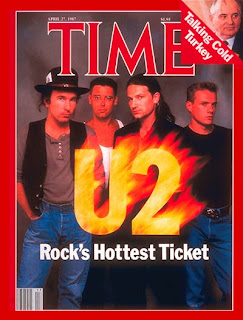

I still pick up a lot of records, but few are nostalgic acquisitions. Writing and editing for Brandracket plays right into my ongoing inclination to seek out young bands worth my time (and what remains of my hearing). I'm talking about the Yucks, Weekends, and Creepoids of the world, and while we're at it, the Big Troubles, Horse Marriages, and Lightouts. Not exactly household names (yet). Then again, nobody outside of Dublin in 1979 had heard of this band with a two-character name that reminded some of a German submarine.


 I wish I could make some sort of hopelessly melodramatic statement about the first time I heard 'The Fly,' the lead single from U2's 1991 masterwork Achtung Baby. The truth, however, is a hell of a lot less sexy.
As a moderately (at most) adventurous 19-year-old -- with the somewhat tentative taste in music to match -- I kind of didn't know what to make of the new sonic territory U2 was suddenly mining in our great season of Nevermind, a.k.a. late '91. I knew I liked Adam Clayton's bouncy bass line on 'The Fly,' though. And I thought the song's video was pretty fun in all its let's-rock-it simplicity. (Still do, in fact.)
The '80s were deep in the rear view mirror by this point, and with them went U2's suffocating pomposity. Good riddance. The band's 1988 documentary Rattle And Hum, full as it was of epic concert sequences, didn't exactly portray the group as a bunch of down-to-earth lads, nor did it do much to dispel the increasingly popular view of Bono as rock's most insufferably humor-deficient frontman. U2's ardent earnestness had painted them into a corner.
What's a superstar band to do once it's:
- Laid down a long day's drive worth of bulletproof songs over the past decade...
- Iconically waved a white flag at a bunch of skiers amid a Rocky Mountain rainstorm...
- Had the 'Rock's Hottest Ticket' tag slapped on it by that old tastemaker, Time...
- Taken self-seriousness to new depths?

There was really only one true path for the band to follow:
- Set the most exciting batch of songs of its career to tape...
- Give the resulting album a jokey name to mask all its darkly unsettling music...
- Don sunglasses and leather...
- Finally act like they're having a good time.

So, I went all-in for the so-called Super Deluxe 20th Anniversary Edition of Achtung Baby a couple months ago -- an indulgent gift to myself for my recent 40th birthday. In this case, I am the target demographic.

Few artistic reinventions have been as successful as U2's between 1989-91. Their leap from frowny-faced, black-and-white-portrayed galvanizers of strident high school and college kids the world over, to funtime-loving, color-portrayed messengers of groove with a fusillade of televisions backing them up...it was all a calculated risk. But it completely worked.
The main reason it completely worked, of course, is the fact that Achtung Baby quickly became one of the monster records of its era. And this new big-ass monument of a boxed set -- six CDs, four DVDs, a 12”x12” hardback book full of essays and striking Anton Corbijn photography; all that's missing is one of those Achtung Baby condoms sold at the merch booth on the ensuing Zoo TV tour -- reinforces this in spades. Achtung Baby has aged better and sounds fresher than anything else from the near-endless smorgasbord of early '90s rock. It's still a monster record -- of any era.

Achtung Baby was the first U2 record you could dance to. Achtung Baby was the first U2 record you could have sex to. (Unless you've ever been able to properly get busy to 'Sunday Bloody Sunday' or 'Bullet The Bullet Sky.' Then you are a very special individual indeed. Kudos.) Hell, there are enough oral sex and masturbation references in Bono's early '90s lyrics to make you think he was quietly working on spec for some North Hollywood porn studio.

But those are just the cheap thrills. Beyond Clayton and Larry Mullen's buoyant rhythms, beyond Edge's insistent guitar work -- industrial-inspired riffs here ('Zoo Station,' 'The Fly'), menacing leads there ('Until The End Of The World,' 'Acrobat'), brilliance everywhere -- and even beyond the album's true X-factor of Daniel Lanois' genius production, it's the songs themselves on Achtung Baby that have kept it in regular rotation for me over the last 20 years.
Sometimes it's also the album's song cycle. As opening salvos go, it's tough to top 'Zoo Station.' Any record that begins with (what's always sounded to me like) an oncoming subway train and an opening lyric as heroically intrepid as 'I'm ready for the laughing gas' has my attention right off the bat.
On the heels of 'Zoo Station,' 'Even Better Than The Real Thing' suckers you into thinking you're in for a 12-track dance party. Not so fast, John Q. Ibiza.
I've probably heard 'One' a thousand times by now (perhaps you have as well), and it never goes out of style. Interpret it however you want -- it's about a failed relationship; it's about a broken family; it's about world peace; it's about the AIDS pandemic; it's about dressing up in drag to drive around snowy Berlin in a Trabant -- but it's the song that basically saved U2's life when they were flailing in the earliest days of recording what eventually became Achtung Baby.

If one of U2's swiftest moves in the '90s was learning how to write phenomenal songs that weren't anthems, there's no sharper example than 'Until The End Of The World.' Linked with 'Who's Gonna Ride Your Wild Horses' -- the opening chords of which sound as if they were recorded amid a Yellowstone blizzard; this is a good thing -- and the slow-creeping betrayal of 'So Cruel,' the song is the linchpin of the first of Achtung Baby's pair of notoriously bleak segments. Of course, this is bleakness you can nod your head to (or even shake your ass to, if you're the ass-shaking sort): Edge's riff on 'Until' in particular is a rhythmic force of nature.
Things lighten up a spell once 'The Fly,' one of U2's most unfairly brushed-aside songs, crashes in to begin the album's second half. What do you get when you meld a completely rad guitar riff, a touch of baggy Madchester in the backbeat, and 'Every artist is a cannibal / Every poet is a thief / All kill their inspiration / And sing about the grief'? Probably my favorite U2 song of all. (Isn't that funny? I don't think so. But if you do, you're not the first.)

The good-time head-fakes continue with dancetacular 'Mysterious Ways' through 'Ultra Violet (Light My Way),' with the alluringly lazy 'Tryin' To Throw Your Arms Around The World' wedged in between (perhaps the song on the record that's best-served by Lanois' deft production). 'Ultra Violet,' meanwhile, is Achtung Baby's last best hopeful moment, all the way down to Bono's uncharacteristic flurry of 'baby baby baby's in the third verse. It's that old uplifting U2 magic all over again...only nobody ever misinterpreted this one to be a rebel song.
In fact, if you were to quit now, you might even have yourself a kind of happy ending. But such a tidy little wrap-up isn't Achtung Baby's aspiration, something that's abundantly clear with the twinkill darkhorse shithammer of 'Acrobat' and 'Love Is Blindness' that closes the album, each featuring searing guitar by Edge. The first is a formidable ode to the wonders of hypocrisy; the second, a meditation on love as a disability not to be lived without. Not exactly lullaby material.
Perhaps the U2 of the '90s -- disco balls, belly dancers, crank-calling the White House from the stadium stage every night, whatever all that silly PopMart business was about -- wasn't so zany after all?
Here's to acting like you're having a good time. ~ Charles Hodgkins

Thursday, November 10, 2011
Stuck In Reverse
Came across an awesome article by English critic Gary Wolstenholme about how our culture, and particularly music culture, has essentially stalled out amidst our collective obsession with the past. Dig it:
http://drownedinsound.com/in_depth/4143982-the-insider--the-stone-roses-amp-the-resurrection-blues
Key snippets (bolding is mine):
"The ability of new ideas to break through to the general public is stifled by endless waves of shallow nostalgia polluted by financial imperatives and waved through by a compliant and toothless set of critics and commentators who either want the world to stop so they can pretend to be 20 for eternity or are part of the marketing team and thus totally unable to pass any kind of meaningful comment on what is happening."
"The likes of Pulp but, to a lesser extent, even Shed Seven and Ned’s Atomic Dustbin have shown that a well scheduled ‘all mates together’ tour can be a lucrative money spinner for bands who were heading nowhere on their demise. That, in itself, is not a problem. When such things are regarded as being of primary cultural significance it is. We are very close to drawing a line under the progression of mainstream progressive music. That is not just bad news for music, it is bad news for culture as a whole and leads to a greyer and less dynamic future for all."
I'm actually a huge Stone Roses fan, but I have no desire to see them. I'm talking about their comeback but also about actually seeing them. I mean, they look like death warmed over. Yikes.
Another symptom of our rampant cultural grave-robbing: Hollywood remaking every movie that's ever been made, including a film (and an inevitable companion McDonald's Happy Meal) about every last superhero ever conceived. When will we as a culture stop looking backward and actually create something new? Somehow our forefathers and foremothers were able to keep the culture moving in a linear fashion - blues > jazz > rock > punk > hip-hop > electronic music. Now what? Rehash???
We've created a truly post-post-post modern culture in which forward progression has slowly morphed into circular motion. And that's boring, uninspiring and troubling on many levels.
I don't begrudge any band to reunite, whether it's for money or love of what they do (and I respect bands like The Sex Pistols and Cream for admitting it's all about the money). But as Wolstenholme so eloquently points out, when such reunions and wallowing in the past define our current culture, we've got a big problem. ~ Tim
http://drownedinsound.com/in_depth/4143982-the-insider--the-stone-roses-amp-the-resurrection-blues
Key snippets (bolding is mine):
"The ability of new ideas to break through to the general public is stifled by endless waves of shallow nostalgia polluted by financial imperatives and waved through by a compliant and toothless set of critics and commentators who either want the world to stop so they can pretend to be 20 for eternity or are part of the marketing team and thus totally unable to pass any kind of meaningful comment on what is happening."
"The likes of Pulp but, to a lesser extent, even Shed Seven and Ned’s Atomic Dustbin have shown that a well scheduled ‘all mates together’ tour can be a lucrative money spinner for bands who were heading nowhere on their demise. That, in itself, is not a problem. When such things are regarded as being of primary cultural significance it is. We are very close to drawing a line under the progression of mainstream progressive music. That is not just bad news for music, it is bad news for culture as a whole and leads to a greyer and less dynamic future for all."
I'm actually a huge Stone Roses fan, but I have no desire to see them. I'm talking about their comeback but also about actually seeing them. I mean, they look like death warmed over. Yikes.

Another symptom of our rampant cultural grave-robbing: Hollywood remaking every movie that's ever been made, including a film (and an inevitable companion McDonald's Happy Meal) about every last superhero ever conceived. When will we as a culture stop looking backward and actually create something new? Somehow our forefathers and foremothers were able to keep the culture moving in a linear fashion - blues > jazz > rock > punk > hip-hop > electronic music. Now what? Rehash???
We've created a truly post-post-post modern culture in which forward progression has slowly morphed into circular motion. And that's boring, uninspiring and troubling on many levels.
I don't begrudge any band to reunite, whether it's for money or love of what they do (and I respect bands like The Sex Pistols and Cream for admitting it's all about the money). But as Wolstenholme so eloquently points out, when such reunions and wallowing in the past define our current culture, we've got a big problem. ~ Tim
Monday, September 19, 2011
We'll Take Manhattan
Brandracketeers Chris Parker, Mark Willett and myself (Tim Scanlin) were in NYC September 6 through 10 for the world premier of The Art Of Flight snowboarding film, which we music supervised for the stellar folks at Brain Farm Digital Cinema. The premier was held at the legendary Beacon Theater in the heart of uptown Manhattan. The sold out show was attended by 3,500 industry folks, boarders, and assorted celebrities (wassup, Justin Timberlake?!). Artists featured in the film include Sigur Ros, The Naked & Famous, Deadmau5, Black Angels, M83 and others. What can we say about it? It's mind-blowing, and exceeded all expectations. Thanks to director Curt Morgan and his incredible team for creating a truly landmark film, and for allowing us to be a part of it.
In addition to the Flight premier we also took the train out to Long Island to see the first Quiksilver Pro NYC, taking place in scenic Long Beach. It's one thing to sit in our comfy chairs all day working on Quik and Roxy projects, but it's another thing entirely to get out on the sand and actually watch stuff go down in front of you. Congrats to all the Quik and Roxy folks who worked so diligently to pull this thing off after the event was almost scrubbed due to a hurricane the week prior. Y'all kicked butt.
Most days were spent traversing Manhattan, meeting with assorted label folks, without whom we wouldn't have a business. Thanks to everyone who took time out to have a chat or drink a beer with us. Brandracket hearts you.
Finished off the trip with a stellar meal at Ma Peche, then headed home, totally beat, but rejunivated by all the cool and inspiring people we met. Can't wait for next time. Here's a few shots...
 The scene outside The Art Of Flight premier @ The Beacon Theater the night of September 7th. 3500 people in attendance.

 The Art Of Flight director Curt Morgan (red baseball cap) introduces the Brain Farm team before the lights go down.
 The Quiksilver Beach House, Quik Pro NYC, Long Beach, Long Island


Wednesday, August 3, 2011
So You Want To Buy A House...
...You knock on the door and say to the owner, "Good day, I'd like to buy this house!" The person at the door says, "Oh, wonderful. You can have the first floor for $200,000, but you'll need to talk to the person who owns the second floor about buying their half." You think to yourself, "Okaaaaay, that's weird." But you really like the house. So you say, "Where can I find the person who owns the second floor?" And the person at the door says, "I have no idea."
Eventually you manage to locate the person who owns the second floor of the house. You say to them, "Hi. The person that owns the first floor of the house says I can buy it for $200,000. So here's your $200,000 for the second floor." "Oh, no," says the owner of the second floor. "I'll need at least $400,000 for my half of the house." And what's worse, now the guy who owns the first floor is saying, "Well, if he's getting $400,000, then I want $400,000!" By this time, you're really PO'd. All you want is a freaking house, and there are lots of other houses, many of which are just as nice but much cheaper and easier to buy. So you go to the equally nice house next door. This time, the entire house is owned by one guy, and he's very excited about selling it to you for $100,000 total. In fact, he really appreciates that fact that you want to buy it, and goes out of his way to accommodate your request for new fixtures in the bathroom and a fresh coat of paint.
Some "houses" are really easy to buy, and some are a nightmare. Rightsholders: are you doing everything you can to make it easy for people to license your music (like, for instance, knowing who the other rightsholders are for the tracks you rep, and quoting fees that are line with going rates)? If not, you're shooting yourself in the foot. It's a buyer's market out there; make sure your houses are in order. We thank you for it. ~ Tim
Thursday, May 19, 2011
Running Shoes: Punk As F#@!
Saw Buffalo Tom last night at the Troubadour here in LA. They completely smoked it.
I needed that, coming at a time when I'm so freaking busy that I've damn near lost sight of why I loved music in the first place. You can have too much of a good thing, and musical burnout is a very real occupational hazard in our line of work. The show last night reminded me of why I've devoted my life to this stuff.
I've seen the 'Tom, like, 15 times (I'm no spring chick, in case that hasn't been established by now). And every time I see them, I'm struck by how completely ordinary they are in every way except their musical talent. Bill, Tom and Chris looked exactly like your 3 pals that showed up on Sunday afternoon to help you move your couch. Jeans, button down shirts off the rack from Target (these are working men, with families to feed) and running shoes (?!). There was no hipster irony in these threads, no sartorial snarkiness. It was simply three dudes who've always had, and continue to have, their priorities straight: an incredible workman-like devotion to writing and playing godhead songs with a feverish intensity...and then fashion somewhere down around the 7th or 8th rung. (In fairness, Bill was wearing a rather sporty fedora that looked great on him.)
Contrast this to the many hipsters that I encounter at my fave Eagle Rock lunch spot, The Coffee Table (so tasty!). I suspect that many of these people are in bands, and I also suspect that many of them are mediocre to lousy. Because most people who put that much time and effort into looking the way these people look are not spending nearly enough time and effort writing and recording godhead songs. Yes, there are exceptions to this rule, and some people -- The White Stripes, Joy Division, The Velvet Underground, Bowie, Nick Cave, Tim Rogers from You Am I, my Eagle Rock homegirl Best Coast -- are able to achieve the magnificent feat of looking incredibly cool and writing godhead songs.
The Buffalo Tom dudes are not among this group, or else they would be significantly more famous and well-off than they are now. But I get the feeling they don't care, and that's part of why I love them. They put the music first, and discerning listeners and show-goers like myself don't give a hoot if they're not wearing v-necks and rolled-up jeans. In fact, I'm REALLY glad they're not.
Another reason why I heart Buffalo Tom? Because Bill Janovitz has blazed a major trail in the straight world, just as I'm attempting to do. Dude has a very healthy real estate career in full swing. Guess what, kids? It's possible to write classics like "I'm Allowed", "Velvet Roof" and "Sunday Night" and go on to have a respectable career that your mother-in-law can be proud of. Who knew??
As someone who's followed the exact same path as these guys (albeit one of much less renown) -- band dude for years, then "real career", wife, mortgage, kids -- I'm really in awe of what they've achieved. In short, these guys are badasses. They can wear whatever the hell they want on stage -- even running shoes. They're allowed. ~ Tim
Wednesday, April 13, 2011
Roxy Chicken Jam 2011
So instead of ranting and raving this month, I thought I'd spare you and just go with some photos of our recent trip to Mammoth, California to help out with Roxy's biggest event of the year: Chicken Jam.
We booked Grammy winner La Roux to perform and were generally responsible for making sure she and her party of 8 arrived safely from the UK and were well taken care of during their stay.
After a last minute road closure that required the band to stay in Reno for the night, they made it to Mammoth in one piece and proceeded to tear up the slopes almost immediately upon exiting their vehicles. A very nice group and we got along swimmingly.
Due to blizzard-like conditions, the concert was moved from the outdoor plaza at The Village to the Canyon Lodge. Hats off to Roxy and XL5 Productions for making a drab cafeteria into a kick-ass, 1500-capacity club by showtime. The free gig was packed within minutes and went off, with Elly (aka La Roux) proclaiming it one of the best they've ever done. Smiles all around, and then it was off to Hyde Lounge for the after party. After shutting the place down we ended up back in our suite for a fairly epic after after party that ended at 5:00am with me and Mickey, La Roux's hilarious keyboard player, discussing our mutual love for Ian Brown. I think the fact that we watched Hot Tub Time Machine, like, 5 times during our stay inspired us to do a little snow-bound raging of our own. That movie rules (and better it than The Shining...).
Congrats to Roxy for an awesome event, and thanks to everyone who helped make it happen. We love the snow and all, but next year let's do it in Maui. :)
A few pics for your perusal...
 The view from our suite the morning after arrival. Lots and lots of snow. The La Roux show was supposed to take place in that plaza down there. Not so much.
 Setting up for the show.
 La Roux dressing room, adorned with a sign hand-crafted by our very own Mark Willett.
 La Roux going off. Yes, she played "Bulletproof" and yes, it was awesome, including the story about how she told Jimmy Iovine to stick it for telling her that it wasn't a single. You go, girl.
 Unnamed Brandracket staffer sleeping off the after party. The drive home was a bit...rough.
See ya next year! ~ Tim
Friday, March 18, 2011
To Sir (Geldof) With Love
I'm definitely not missing being at the circus that is SXSW this week. Like others, I contend that it's largely a waste of time (and I've lived the fantasy/nightmare enough for several lifetimes, thank you very much). But based on this report, I am bummed to have missed Sir Bob Geldof's keynote speech, in which he apparently echoed what I've been lamenting for a long, long time: that nobody is saying anything worth hearing, and that there's a distinct lack of, as he puts it, "disgust" in the proceedings of this thing we call popular music. Here's a choice quote (bolding is mine):
“What’s music got to say about it? I don’t hear it. Maybe I can’t hear it. Maybe this hyper democracy of the Web simply gives an illusion of talent. You can download a studio. Download any instrument. You can pick up any instrument for nothing. You can make, cut and paste to create fab artwork to make your CD. Everybody has got the means to say anything they want, but nobody has anything to say. We need to talk about it."
Glad to see that I'm not alone in my concern and my desire to hear someone shake things up. And again, I ask that if you know of an artist that's "disgusted" (as defined above), please let me know. I'd love to hear them. ~ Tim
Saturday, February 12, 2011
The Death of the Scene
Awesome story here on The Drive-By Truckers and how they're essentially completely ignored by the Indie Rock Cognoscenti.
I've spent years proclaiming this band the best American rock outfit and, while it's clear that thousands of rabid fans agree with me, it's nice to see someone articulate it so well and convincingly.
I must confess to not having really sunk my teeth into the band's new album Go-Go Boots, but I've watched a few of the video vignettes that they've created to help promote it, and they're a fantastic glimpse into the inner workings, history and general awesomeness of this uniquely American crew.
And they've got me lamenting the fact that regional scenes -- groups of artists and the sounds they create as defined by their geographical surroundings and proximate peers -- are largely a thing of the past.
Ultimately I blame the internet. Yeah, seriously. Because (no) thanks to the internet, some kid in the farthest reaches of God Knows Where can be exposed to every musical trend that's occurring in the world. And that is both awesome and horrible. It's awesome because The Kid can be exposed to all kinds of music. And it's horrible because The Kid can be exposed to all kinds of music. That is, instead of creating his own sounds and songs with limited outside influence, where he's forced to mostly figure it out for himself and create something original, he can just mimic something he sees on YouTube or MTV.com or Pitchfork. Meanwhile, thousands of kids are doing the same thing. The result: homogeneity. Everyone sounding (and wearing and saying) the same. Nobody doing anything that's truly unique or out there.
Yes, there are plenty of instances where exposure to outside musical forces resulted in a new, exciting composite. Keith Richards discovering Chuck Berry, The Clash discovering Jamaican rock steady, M.I.A. blending bleeding edge production techniques with Sri Lankan folk music, Vampire Weekend using African Highlife guitar techniques. In the case of the latter, were they exposed to it in their Columbia dorm rooms via the internet? Quite possibly. Was that a good thing? Absolutely. But these instances are unique in that 1) these artists were fundamentally more talented most of their peers and 2) they took something new and melded it with something else that was their own to create an exciting amalgam. Unfortunately, most artists are not sophisticated enough to do this; they simply internalize what they see and hear and regurgitate the exact same thing.
Of course, this issue of the influence of outside forces on the artist's creativity has existed since the first time someone painted something in a cave however many millennia ago. Someone else saw it and it affected them and their art. But we've never seen it on the totally pervasive, inescapable level that it exists now. There's influence, and there's total saturation.
I'm old enough to remember when different parts of the country sounded, well, different. There actually was a Seattle sound at one point. Ditto for LA, Minneapolis, Athens, NYC, Memphis, San Diego, Gainesville - the list goes on. You could often predict a band's sound by their ZIP code. Not so much anymore, and I miss that. "Why??" someone might ask. "Exposure to new types of music makes things more interesting, more...21st century." But is it better? I'm tired of people talking about how the globalization of music is unequivocally a good thing. Certainly some aspects of it are, but there's also a price to pay, most importantly the loss of truly homegrown music, whether it comes from Senegal or Detroit. Don't forget, regional and homegrown scenes have historically been romanticized and fetishized by listeners (Japanese kids in love with rockabilly; American kids dressing like mods) every bit as much as "global" sounds. Do we really want a world in which everyone sounds like everyone?
I think this helps explain my love for Drive-By Truckers. Because in addition to writing incredible songs, they sound like their surroundings. They're not ashamed of where they come from, nor do they try to hide it or water it down or homogenize it. Instead they embrace it and cultivate it and indeed revel in it. (Another shining example of this that I was recently reminded of is The Libertines, the short-lived and utterly kick-ass unit of Carl Barat and arch fuckup Pete Doherty. These guys celebrated their Englishness and their thoroughly soused way of life in the same way as Blur and Oasis, but on a much more debased, shambolic and sinister level. You could just tell they were drunk English kids happy to be drunk and English, and it made their awesome songs even more awesome.)
I could -- and very well may, some day -- write a book on why the Internet has not always been great for music. (And yes, I completely grasp the irony of saying that as the CEO of a company that would not exist without music on the internet. I clearly have some reconciling to do.) High up the list of reasons will be its deleterious effect on regional scenes as I and thousands of other music fans knew them.
I'll probably be listening to Drive-By Truckers as I write it.
Monday, November 8, 2010
In Control
Here's a typical scenario that we here at Brandracket HQ see on an almost daily basis. The chronology goes something like this:
The moral of this story is NOT that big publishers and record labels are evil. We have many, many friends at both, and they are fine, upstanding members of society.
No, the moral of this story is that if you're going to relinquish control of your music, you better be damned sure that you know what you're doing, and that you've been well compensated in the deal. Because it might be the only money that you see for a long time.
Whenever you license, sell or otherwise transfer the rights to your songs or recordings to a third party, you are ceding a great deal of control. You are also ensuring that you will miss certain opportunities (see above).
Now, a person from one of the aforementioned third parties would be quick to argue that by partnering with a large publisher or record label you will be offered opportunities that are sexier, higher profile and more lucrative than those available to you as a free agent. On the cusp of 2011 this is highly debatable. But one thing is certain: you may be held hostage by your shiny new deal. This is not an exaggeration; we see it happen all the time (again, see above).
As we all know, it's a new world out there. There are opportunities galore for artists willing to hustle. But what's the point of working so hard if you're not able to make the final decision as to where/when/how your music is used, and at what price? By retaining control of your music you're the boss, able to cut deals and place your music on literally a moment's notice. And that's good. 'Cause companies like ours and the people we work for usually only have a moment (or less).
If you're savvy, willing to work your ass off to get your music in front of the right people, and - I cannot stress this enough - you have AMAZING SONGS - you will find that the smaller opportunities - the "micro gigs" - will present themselves. And they'll add up to real money over the long haul.
I'm walking proof of this. I was in a band for 15 years. For the longest time I wanted a publishing deal, and I was bummed when we didn't get one. But at the end of our run, when I added up all the license fees and PRO checks that I'd received - for bigger uses like TV shows and shoe commercials, but also a bunch of smaller placements that a big publisher wouldn't sneeze at - they significantly exceeded whatever advance we would've been offered (and most likely never recouped, because we would've been one of 500 artists on the roster).
My advice to young artists is this: if someone offers you serious money for the rights to your songs or recordings - consider taking it, and if you do, spend it wisely. Because as mentioned above, it may be all the money you'll see from that deal 1) ever or 2) for a very long time. However, if someone offers you a small advance, think twice and three times. Is a new van or gear for the band worth forfeiting the control, the opportunities you'll miss and the money you can earn on your own? There are other ways to raise capital, ones that don't involve relinquishing control of your biggest asset - and indeed the whole reason you do what you do: your music. ~ Tim
- Artist's music is pitched to us by a promotions company - we'll call them The Provider - who, despite being the official rep for the artist during the current album cycle, does not know (or care to ask at the time they're hired) who controls the rights to the actual music.
- We listen to the Artist and realize that they're a perfect match with one of our clients, Brand X. So we pitch it to them.
- Sure enough, Brand X really likes Song Z and would like to license it for inclusion in Promotion Y. The all-in fee isn't huge by any stretch - $250 - but Brand X is massive, and the Artist will be credited prominently on-screen and featured on Brand X's blog, thereby exposing them to potentially thousands of life-long fans, some of whom will at some point pay to see the Artist, buy their merchandise and maybe - just maybe - purchase their music through a legal download store (or stream it on Rdio, Grooveshark, Mog, etc). Not to mention, other industry professionals like us may discover the Artist via the Brand X promotion, and offer them additional paid opportunities.
- We hit up The Provider about licensing the track. Sorry, they say, you need to talk to the label directly. So we hit up the label. They're stoked, as is the band. But there's a problem: the band signed a publishing deal recently and while we might have been able to get the song for $250 a couple months ago, the price has now quadrupled.
- Sorry, we say, Brand X only has $250. We move on to the next band in line, the one that controls 100% of their masters and publishing. They sign the licenses electronically in our BrandsForBands system in literally 2 minutes, and they're up on Brand X's web site two days later being listened to by thousands of kids, most of whom are hearing them for the first time. Love is in the air.
The moral of this story is NOT that big publishers and record labels are evil. We have many, many friends at both, and they are fine, upstanding members of society.
No, the moral of this story is that if you're going to relinquish control of your music, you better be damned sure that you know what you're doing, and that you've been well compensated in the deal. Because it might be the only money that you see for a long time.
Whenever you license, sell or otherwise transfer the rights to your songs or recordings to a third party, you are ceding a great deal of control. You are also ensuring that you will miss certain opportunities (see above).
Now, a person from one of the aforementioned third parties would be quick to argue that by partnering with a large publisher or record label you will be offered opportunities that are sexier, higher profile and more lucrative than those available to you as a free agent. On the cusp of 2011 this is highly debatable. But one thing is certain: you may be held hostage by your shiny new deal. This is not an exaggeration; we see it happen all the time (again, see above).
As we all know, it's a new world out there. There are opportunities galore for artists willing to hustle. But what's the point of working so hard if you're not able to make the final decision as to where/when/how your music is used, and at what price? By retaining control of your music you're the boss, able to cut deals and place your music on literally a moment's notice. And that's good. 'Cause companies like ours and the people we work for usually only have a moment (or less).
If you're savvy, willing to work your ass off to get your music in front of the right people, and - I cannot stress this enough - you have AMAZING SONGS - you will find that the smaller opportunities - the "micro gigs" - will present themselves. And they'll add up to real money over the long haul.
I'm walking proof of this. I was in a band for 15 years. For the longest time I wanted a publishing deal, and I was bummed when we didn't get one. But at the end of our run, when I added up all the license fees and PRO checks that I'd received - for bigger uses like TV shows and shoe commercials, but also a bunch of smaller placements that a big publisher wouldn't sneeze at - they significantly exceeded whatever advance we would've been offered (and most likely never recouped, because we would've been one of 500 artists on the roster).
My advice to young artists is this: if someone offers you serious money for the rights to your songs or recordings - consider taking it, and if you do, spend it wisely. Because as mentioned above, it may be all the money you'll see from that deal 1) ever or 2) for a very long time. However, if someone offers you a small advance, think twice and three times. Is a new van or gear for the band worth forfeiting the control, the opportunities you'll miss and the money you can earn on your own? There are other ways to raise capital, ones that don't involve relinquishing control of your biggest asset - and indeed the whole reason you do what you do: your music. ~ Tim
Wednesday, September 29, 2010
The Hard Sell
Went to an industry shindig here in LA the other night and all the free drinks and booze on offer couldn't eclipse the fact that many of the people in that room are doomed...or at least their jobs are.
This was a small group of highly intelligent music industry veterans - people from every corner of the business, including label reps, artist managers, publishers, social media honchos and press. The conversation was candid and free-flowing, with opinions galore. But one fact kept coming up: if you're in the business of selling digital media - whether it be music, video, books - you've got a very tough road ahead, one that I and many others believe could eventually end at a cliff if you refuse to accept the reality of what's happening around you.
I often appreciate the fact that we here at Brandracket are not in the business of selling content. We're essentially a broker; we facilitate mutually beneficial relationships between rightsholders and companies who want to license content for both paid and promotional uses. As long as copyrights exist, we'll have a business, though it will surely have its ups and downs.
But what about record labels, film studios, music and book publishers, and others who are in the business of bankrolling content, then charging for it? Will they have sustainable businesses 10 years from now, when technology has made pirating content almost telekinetic, and bands, filmmakers and authors no longer need a traditional infrastructure to distribute, promote and place their works? (This is already the case, actually.)
I think the answer is yes - for those who understand the space and where things are headed. Because while I do think that the traditional label/studio/publishing house model is on its way out, artists will always have a need for someone to help them distribute and promote their works to the world at large. I think there's a huge opportunity for well-organized, smart and experienced people to position themselves as mid-wives to these artists.
There was one gentleman at this industry confab who was quite vocal in his belief that the path to a sustainable future for rightsholders lies in 1) monetizing absolutely every shred of content and 2) selling more of it for less. It's all about micro-payments this guy was saying; forget about selling an album for $9.99 on iTunes - knock the price down to $3 and sell a lot more. That sounds to me like one helluva gamble for rightsholders (and a tough pill to swallow for artists), but he might be right. In the Age Of Free, rightsholders might need to take prices way down if they want any hope of people buying.
One thing is certain: any rightsholder standing still hoping that the problem of his dwindling sales will magically go away is on a collision course with extinction. Content owners: you are at DEFCON 1 ("Cocked Pistol" in the parlance of NORAD), a truly adapt-or-die situation. I would encourage you to experiment with different models, take some chances, make some mistakes (or victories) and learn. But whatever you do, do something. You can start here. ~ Tim
Wednesday, July 28, 2010
Now Sounds
Apologies to the 7 people who read this blog for not posting anything recently. We've been busy, real busy.
Reading over my previous post, I realize that I may come off as a bit of a curmudgeon who's fixated on music from the past. Well, just to prove that we do in fact listen to (and love) current artists and bands, here's a quick round-up (in no particular order) of stuff that's floating my boat, circa now:
Groove Armada - I'm loving Black Light, the band's recently released full-length on SF's esteemed Om Records. Stand outs are "Shameless", featuring Bryan Ferry at his croony best, and "Just For Tonight", a moody acoustic rocker with some excellent electronic flourishes.
One For The Team - Discovered this band via our friends at Afternoon Records (one of my favorite labels - their roster is consistently excellent). Great male-female vox and top-shelf songwriting. What more could you ask for? Check out their excellent new album Ghosts, which includes the stand-outs "Best Supporting Actress" and "Hard For You".
Deluka - A lot of people think this Brooklyn-via-Birmingham, England quartet is gonna blow up upon the release of its debut full-length this fall, and I must agree. Singer-guitarist Ellie Innocenti has some pipes for the ages and songs like "Cascade" and "OMFG" are winners. Think Elastica updated for the new millennium.
Admiral Radley - New indie-pop supergroup featuring Jason Lytle and Aaron Burtch from Grandaddy and Aaron Espinoza and Ariana Murray from Earlimart. 'Nuff said. The little geo-specific music bites at the end of "Sunburn Kids" are both brilliant and hilarious. I love a band with a sense of humor. Check their debut, I Heart California.
Autolux - This LA noise-rock band features ex-Failure bassist Greg Edwards, along with fellow '90s alt-rock vets Eugene Goreshter and Carla Azar. Though they owe a heavy debt to My Bloody Valentine and Sonic Youth, they manage to carve out a sound all their own, and new album Transit Transit is a real winner. Check out "Audience No. 2", "Supertoys" and the epic closer, "The Science of Imaginary Solutions".
Bad Rabbits - Do yourself a favor and seek out "Can't Back Down" from their late '09 album Stick Up Kids. The best Prince song that Prince didn't actually write. I'd really love to see these guys.
See? We do listen to stuff from this century. Hooray. ~ Tim
Monday, March 29, 2010
Speak Up, Please
I had lunch today with a guy who's pretty high up on the foodchain at one of the biggest indie labels in the world, and we both agree: a lot of independent rock music in 2010 sucks, or is at least not terribly interesting or engaging. So much of it is just milktoast, neutered...meh. No one is saying anything anymore. I call it the sissification of indie rock.
For me, the real issue is vocals and lyrics, specifically how both have increasingly taken a backseat to the music over the last decade. These days it's like we're trapped in some gauzy, mush-mouthed, non-committal, thumb-sucking version of what independent rock used to be.
The aforementioned label rep and I were reminiscing about The Minutemen. Now, this was a band comprised of three dorks (there's really no better description for D. Boon, Mike Watt and George Hurley, and they would most likely agree with that estimation). The Minutemen were not cool in any traditional sense of the word. But they didn't need to be. Because their music was so good and so compelling that it negated any need for additional trappings. And perhaps the thing that made the Minutemen one of the greatest bands of all time - other than their kick-ass art-funk/punk - was D. Boon's lyrics, sung loud and clear, usually with very little margin for interpretation. D. Boon sang about stuff like the legacy of Vietnam ("Vietnam"), the role of advertising in American culture ("Shit From An Old Notebook") and the tyranny of working for minimum wage ("This Ain't No Picnic"). He made statements - insightful, powerful, often humorous statements, communicated in straightforward language that everyone could understand.
There are of course legions of other bands that have done the same throughout the history of this music we call indie. Some of my faves:
X - John Doe & Exene's rock poetry was half Bukowski, half George Jones & Tammy Wynette, and all brilliant
Concrete Blonde - Johnette Napolitano was a master at communicating literal thoughts in an engaging, poetic way
The Replacements - The first and best emo band. What real heartache and desperation sounds like.
Archers Of Loaf - With songs like "Harnessed In Slums" and "Greatest Of All Time" Eric Bachman positioned himself as a master of angst articulation
Sebadoh - Lou Barlow is one neurotic mofo, but he's also a lyrical genius
The Hold Steady - I have contended since about 1995 that Craig Finn is the American Elvis Costello, from a lyrical perspective. And though it's my opinion that THS has essentially become an E Street Band tribute act at this point, I'm still grateful that Craig is carrying the torch for real lyrics, sung unironically.
Drive-By Truckers - Some of the best lyrics of the last decade about topics ranging from the war in Iraq to Vegas-bound grifters to the murder of a friend
Ted Leo - A great writer, not afraid to articulate exactly what he's thinking
The list goes on and on and on. But it starts getting very thin around the turn of the millennium. Why? Why do so many of today's young musicians eschew literal lyrics and prominently mixed vocals in favor of non-committal mumbling? Are they embarrassed to speak their minds? Do they not have anything to say? Have they been lulled into complacency by video games and Sidekicks and Facebook?
Now you 20-somethings out there, before you write me off as some nostalgic old codger, understand this: I listen to new music every day, all day. And it's very rare that I hear a band or artist that writes powerful lyrics (about something other than their own personal concerns) and sings them in a well-articulated manner. So I'm sincerely asking you: where are the bands that have something to say?
All I know is that if I see one more innocuous indie band or artist sheepishly approach the mic while staring at the ground I'm gonna hurl. Message to young musicians everywhere: please grow some balls/ovaries, write some real lyrics and turn them up in the mix. We live in an insane world; there is so much to talk about. Some of us would really like to hear what you have to say. ~ Tim
Monday, February 22, 2010
Ding Dong The Witch Is Dying
Saw this article in Digital Music News today. For those too lazy to click, here's the gist:
"US-based terrestrial radio stations suffered an absolutely brutal decline in 2009, according to data released Friday by the Radio Advertising Bureau. Across various revenue-generators - on-air, off-air, digital - revenues slumped 18 percent to roughly $16 billion. Of that, local stations suffered a 20 percent decline to $10.8 billion, and national stations slipped 19 percent to $2.4 billion."
For music-lovers and artists of my generation who grew up under the tyranny of terrestrial radio, this trend is fantastic news. No longer do behemoth's like KROQ in LA or K-ROCK in NYC control which bands and artists we're exposed to. Instead there are thousands of music sites, blogs, and services like Slacker, Pandora and La La, each one of them pointing us to scores of artists that heretofore would've gone undiscovered amidst commercial radio's iron fist hegemony.
These days, when I'm driving the freeways of LA and I dare to tune into KROQ (usually to giggle at how bad "modern rock" radio has become), I will inevitably hear a deep voice remind me that I'm listening to "The World Famous KROQ." News flash: you may be famous to the remaining 4 people who turn to you to discover new music, but to most music fans that I know you're a has-been, a totally obsolete relic. I mean, seriously: who listens to commercial modern rock radio anymore? I think the answer is 15 year olds who are discovering Nirvana for the first time, or people stuck in their cars, desperate for something to break the silence. As for me, if I never hear "Come As You Are," "Longview" or any song by the Foo Fighters ever again it will be too soon. At this point I have an almost Pavlovian reaction to hearing that stuff. I literally can't stand it. That's sad, and it is totally commercial radio's fault.
So here's to the continued decline of Big Radio. One thing for which I'm eternally grateful is that I've lived to see its power and influence totally eroded. Good riddance. ~ Tim
Friday, December 11, 2009
5 Steps to Greatness
I see and hear a lot of bands these days that are totally interchangeable. So many of them sound alike, which I attribute directly to the internet and the fact that artists and bands no longer develop on their own, away from outside pressures and forces (think about pre-internet instances such Nirvana toiling in Aberdeen, Washington, or REM in Athens, GA, or Prince in Minneapolis, or NWA in Compton, or pretty much all of the amazing bands to come out of Dunedin, a small town on the South Island of New Zealand).
The incredible homogeneity among today's scene has gotten me thinking about all of the truly unique artists and bands that have come along, and the factors that contributed to their greatness and staying power. And though this post is kinda tongue-in-cheek, I really do think that if a band follows these steps, they'll have a much better shot at god-like status. So kids, here's some advice from an old guy (by rock standards) who's seen a lot:
1. Dial in a unique tone on your instrument. Think Peter Hook's bass sound in Joy Division/New Order, or Steve Albini's guitar tone in Big Black, or John Bonham's drums on pretty much everything.
2. Write some incredibly good songs.
3. Find a visionary producer. Someone who can elicit amazing performances from you and your bandmates. Listen to what he/she says. Be clay in their hands.
4. Cultivate an image. Even if it's a non-image (see: Grunge) - and dress to the nines.
5. Strike a pose. Find someone - Anton Corbijn or Charles Peterson would be good - to take lots of black and white photos of you in accidentally iconic poses (see: The Velvet Underground, The Smiths, Bob Dylan, et al). These will look really good as posters on dorm room walls and the inevitable coffee table books about you.
Then what? Well, the rest is luck, timing, who-you-know and a bunch of random variables that you have no control over. You're either destined to be a legend or you're not. But if you follow my 5-step plan, you just might make it. Bon chance, mes amis. ~ Tim
Monday, December 7, 2009
Favorite things, ca. now
Ok, it's been an absurdly long time since we posted a blog entry here. Just in case you were afraid Brandracket had become some kind of music agency ghost ship, drifting listlessly upon the sea, never fear, we are indeed extant. In fact, we'll be announcing a couple really cool things shortly. Meanwhile, here's a list of 10 things that I really love right now, in no particular order:
1. Dr. Rockso. Still.
2. "Pizza Guy", You Am I
3. Rain in California...at long last.
4. Playing live rock 'n' roll music and in doing so, being reminded why I've devoted my life to this stuff.
5. "Hurtin' Crew", The Descendents. Is Green Day paying this band monthly royalties? Because they're pretty much the architects of GD's sound (at least until a couple albums ago), one which they've taken to the bank, many, many times. To Billy Joe's credit, he's probably the first person to admit this.
6. Having a home for the holidays when so many do not.
7. Gingerbread cookies. (In fact, cookies of all kinds. Any cookie. Seriously.)
8. Revisiting the brilliance of Scooby Doo on a daily basis with my 4 year old.
9. "Silver" by Echo & The Bunnymen. Is there a guitar band that's this good today? Seriously. I'm not some out-to-lunch, over-the-hill dad that listens exclusively to the Collective Soul cassette that's stuck in my car's stereo. I'm immersed in new music 24 hours a day, listening very keenly. And I'm pretty sure there isn't a rock band anywhere near as good as Echo & The Bunnymen when they made Ocean Rain in 1984. I welcome any suggestions to the contrary.
10. Jawbox reunion on Fallon, 12/8.
Happy Holidays, everyone. ~ Tim
Tuesday, August 18, 2009
The Rock Star Myth
I was walking around my local mall with the wife and kids on Saturday and noticed the increasing fascination with what I'll call The Rock Star Myth. Everywhere I go, I see people of all ages with shirts that say "Rock Star", or they're trying to look like rock stars - the ones they see on TV, in movies, and in video games like Guitar Hero and Rock Band.
Remember that show called Rock Star, where the guy got chosen to be the new singer for INXS? It was truly hilarious/horrific in the way that it reinforced middle-America's idea of what a rock musician is. It was all leather pants, died black hair, 27 bangles on each wrist and Les Pauls scraping the stage. You could almost picture the manicured network suits in their corporate conference room, sipping their lattes and talking about how they wanted the show to be "edgy", when in fact it was Appetite For Destruction scrubbed clean and served up for a polite studio audience.
Now, to anyone who's ever actually been in a working, touring rock band (cough, cough) this stuff is hilarious. Because we know how far from reality all of this lame posturing and imaging really is. Yes, there are many people in bands who look like the animated characters in Guitar Hero, but their reality is sordid, I can assure you, no matter how big of a legend they are in their own mind. Sleeping on floors, all night drives, crappy food, in-fighting, poorly attended shows, indignities at every turn - it's just the tip of the iceberg when describing what a real rock, uh, "star" endures on a daily basis.
Ultimately, shows like Rock Star, tween-focused movies like Band Slam, and games like Rock Band and Guitar Hero just propagate an entirely BS notion of what being a working musician isn't. Now, don't get me wrong. I love the rock. I'm all for youthful enthusiasm and chasing the dream, and I sincerely hope that the kids at the mall someday get to experience what it's really like to be in a living, breathing rock band. But once confronted with that cold, hard reality, I suspect many of them will retreat to their Xboxes before they even make it onto a stage. ~ Tim
Thursday, July 2, 2009
Never Trust A Ho (Especially If It's The Media)
If there is a shining, definitive example of the hypocrisy and craven lack of integrity inherent in 99% of today's media outlets, the coverage of Michael Jackson's death is it.
In the eyes of The Media, Michael Jackson was a walking freakshow the morning of June 25th. Someone to be ridiculed, made fun of, attacked, investigated - you name it. And then, in the time it took his last, shallow breath to pass over his (we can only assume) painted lips, he magically reverted to Michael Jackson, The Greatest Entertainer Of All Time. Someone to be celebrated, lionized and worshipped like it was 1983 all over again.
It's amazing what a short memory we have as a culture. Celebrities are crucified and resurrected in a matter of months. And why not? Otherwise there wouldn't be any celebrities to worship. But Michael was the exception, being pretty much under siege for the last 2 decades (granted, usually due to his own bizarre/suspect actions).
Ultimately I just feel sorry for MJ. A clearly sweet kid who had his brain warped at an early age by external forces (his dad, fame) that he couldn't control. I'm actually kind of glad that it's over, 'cause I'm scared to think about the state he'd be in at 70. So RIP, Michael. If there is a Heaven, I'm sure you moonwalked straight through the Pearly Gates. ~ Tim
Thursday, May 21, 2009
Yeah...What He Said
Chicago Tribune music critic Greg Kot recently released a book entitled Ripped: How the Wired Generation Revolutionized Music, in which he offers some keen insights into to the creation of the new digital music landscape.
In this recent interview with Time magazine, he perfectly articulates something that we here at Brandracket tell artists and labels all the time: people can't pay you if they don't know who you are. Here's the choice quote (I've done some bolding for emphasis):
"The biggest problem a band has is getting its music heard. For years, the music industry was confined to four multinational corporations that dominated the revenue stream of 70% of the music coming in, and four or five radio conglomerates that controlled what music was going out. Now all that has been broken up into millions and millions of little pieces and subcultures and niches that are serving small, really dedicated communities of music lovers. Listeners may not necessarily pay for that one song or the one album, but if they're intrigued enough, they're going to start following an artist or band. They show up at the gig or buy the merchandise or buy the next CD or the vinyl version of the MP3 they just downloaded. If you're a good band and making quality music, your fans are going to want every piece of what you put out. Once an audience is there, there are all sort of money-making opportunities."
It's simple kids: think of a free MP3 as a sample piece of chocolate fudge sitting on a confectionary counter. Give people a taste and they'll want more. Don't give them a taste and they'll never know how delicious you really are. Free (in moderation) does not equal giving away the farm. It equals awareness, which is the first step to cash in your pocket and food on your table. Learn it, love it, live it. ~ Tim
Subscribe to:
Posts (Atom)